
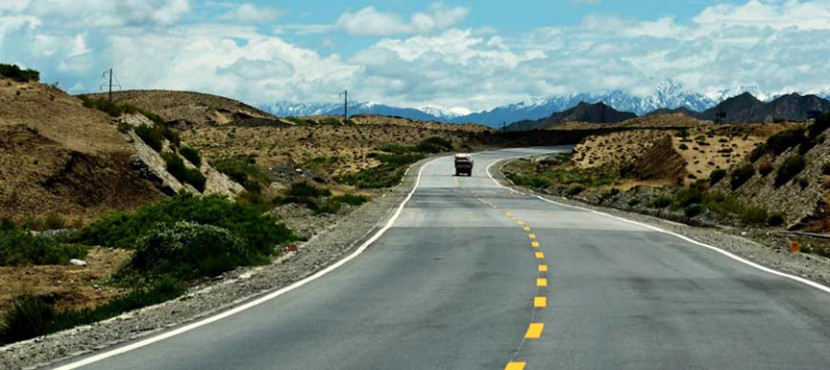

Touted as the world’s most beautiful road, Sichuan-Tibet Highway (via G318 National Highway) enjoys much praise and abuse for its winding roads along grotesque gores and rugged peaks. The epic road trip covers 2250km in around 8 days. You will embark your journey from Chengdu, the gateway city to Tibet on the easternmost edge of Tibetan Plateau, and pass soaring mountain passes along eastern ridge of Tibetan Plateau. The epic overland journey across world’s spine takes you to venture into the deepest ravines in the world and further to the heart of Tibetan culture and history.
Outline Itinerary
Day 01 : Arrival in Chengdu (500m) |
Day 02 : Chengdu - Ya’an - Luding - Kangding - Xinduqiao Bridge (410km, around 10h) |
Day 03 : Xinduqiao - Yajiang - Litang(Ke’er Temple) - Haizishan Mountain - Batang(400km) |
Day 04: Batang - Jinsha River (upper reaches of Yangtze River) - Markam - Lawu Mountain - Dongda Mountain - Zogong (260km) |
Day 05 : Zogong - Bangda Grassland--Yela mountain (Nu River Mountain) - Seventy-two Bends - Baxoi--Rakwa Tso (200km) |
Day 06 : Rakwa Tso - Midui Glacier--ParlungTsangpo - Bomi (250km) |
Day 07: Bomi - Tongmai - Lulang Forest - Sejila Mountain (Mt. NamchaBarwa) - Nyingchi |
Day 08: Nyingchi - Lhasa (420km) |
Day 9: Lhasa Tour - Potala Palace, Jokhang Temple, Barkhor Street (B) |
Day 10: Lhasa Tour - Drepung monastery, Sera monastery(B) |
Day 11: Departure from Lhasa |
Day 01 : Arrival in Chengdu (500m)
Pick up tourists at Chengdu Shuangliu International Airport and escort them to hotels. For the rest of the day, you may have a good rest at hotel or stroll leisurely yourself at Chunxi Road Pedestrian Street, Broad and Narrow Alley, Jin Li Ancient Street, etc.At around 7pm, the whole tour group, including Tibetan guide, will enjoy a welcome dinner (traditional Sichuan Cuisine). After dinner, the guide will give a briefing about the tour itinerary and dos and don’ts during the tour.
Day 02 : Chengdu - Ya’an - Luding - Kangding - Xinduqiao Bridge (410km, around 10h)
At 7PM , we are expected to take tour vehicle from Chengdu to Xinduqiao via Ya’an. As we travel against the flow of Dadu River, upper reaches of Yangtze River, you will pass the first soaring peak on Tibetan Plateau, i.e. Zheduo Mountain(mountain pass 4298m). Instantly, the entire scenery starts to invite you in. Upon seeing exotic Tibetan villages, lush pastures, and grazing yaks, bobbling brooks and fluffy clouds over deep blue sky, you find it hard to move your eyes away from the windows of tour vehicle. Keep heading west, after winding roads, we finally end up in Xinduqiao, known as a paradise for photography.
Day 03 : Xinduqiao - Yajiang - Litang(Ke’er Temple) - Haizishan Mountain - Batang(400km)
Xinduqiao wakes up in soft and tender sunlight in the early morning. And its big name as a heaven for photography will never let you down. Accompanied by picturesque small bridges, peaceful local villages and exotic Tibetan houses, and yellow poplar trees, we move westward towards to raging valley of Yalong River and exuberant forest.On the way, we will pass famous Yajiang and finally reach Litang, a city on Qinghai-Tibetan plateau with an altitude of 4000m. Litang is a natural grassland on the plateau. Grazing yaks, sheep and nomad’s tents dotted across the massive pasture are the most common scene. If you come in summer, you will be greeted by the waves of blossoming flowers.
Besides, another star attraction inLitang is Ke’er monastery, a prestigious Gelugpa Monastery on this lively pasture. The entire monastery is built along the mountain, with varied heights. Adorned with gilded frame, the highest temple of it is instantly recognizable at a great distance.Then after visiting Litang, the whole team travel through Haizishan Mountain (4700m) and venture into menacing valley regions and at night we should make it to Batang County.
Day 04: Batang - Jinsha River (upper reaches of Yangtze River) - Markam - Lawu Mountain - Dongda Mountain - Zogong (260km)
Today, we officially enter the Tibet Autonomous Region. As wide as 300 sq km, our tour vehicle will move in regions where Jinsha River, Lancang River and Nu River flow paralleled. The three renowned rivers share the same source originating from rivers of Tanggula Mountains on Qinghai-Tibet Plateau. As the relentless torrent pounds jagged mountain in deep valley, you can hear the roaring sound of nature. Undoubtedly, this part of the road is also the most difficult one.
Without any hesitation, we keep travelling westward and pass Lawu Mountain (4358m) and Dongda Mountain (5008m). Standing atop of lofty mountainpasses, covered with snow, you can enjoy the spectacular vista of zigzag Sichuan-Tibet highway and incredible Lancang River crawling through mountainous ranges. Surprisingly, hardly can you find vegetation at the lower part of the valley. Flanked by rugged mountains, the brown river flows afar like a blazing fire, which makes one of the highlights of entire road trip. At night, the whole team will reach the city of Zogong.
Day 05 : Zogong - Bangda Grassland--Yela mountain (Nu River Mountain) - Seventy-two Bends - Baxoi--Rakwa Tso (200km)
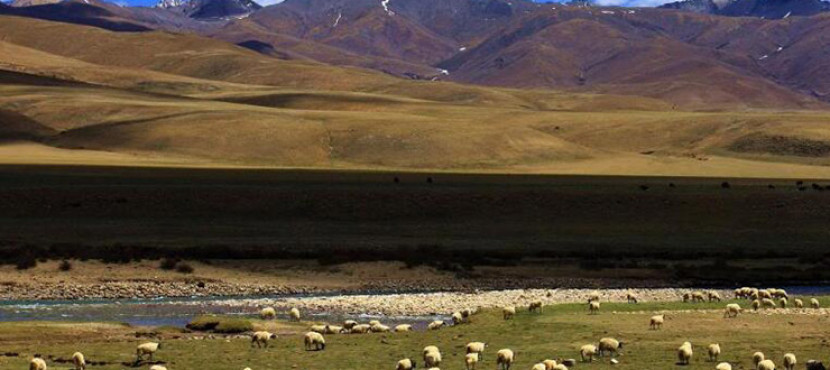
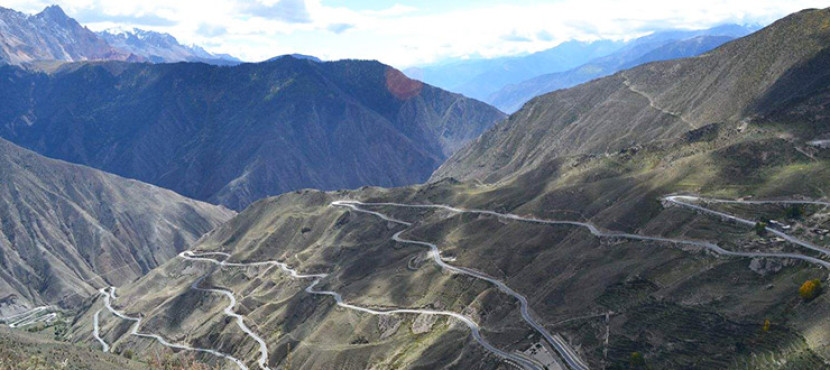
As we hit the road from Zogong, our next destination would be Bangda Grasssland, the most importantnatural pasture in eastern Tibet. The gentle river and boundless grassland are home to flocks of sturdy yaks, horses, and sheep and other wild life. The vibrant grass and other little known flowers and bushes rule this enchanting place. They provide ample food for animal husbandry and Tibetan nomads.After a brief tour in enchanting Bangda Grassland, our team is expected to travel across Yela Mountain (4839m), the most dangerous natural barrieron Hengduan Mountain Range. Then we will move downward by following famous Seventy-two Bends till the shore of Nu River. The snow-blanketed mountains range stretches into infinite vista.
Further moving westward, we begin to be surrounded by soaring snow mountains, pristine forest and idyllic Tibetan villages. All of sudden, you realize we are now in a world of forest where the sheer drop of altitude would reach 2500m. And that leads to huge temperature change (up to 20℃) from mountain pass to the bottom of valley. You can experience 4 seasons in a single day. At night, we will arrive at Rakwa Tso.
Day 06 : Rakwa Tso - Midui Glacier--ParlungTsangpo - Bomi (250km)
Serving as the source of Parlung Tsangpo Lake, Rakwa Tso is a typical seasonal glacial lake in Chamdo. The narrow strip of river stretches westward for about 10kmand slowly winds up in a giant canyon. In the foreground are the lovely Tibetan villages; as you look further, the shimmering light of Rakwa Tso displays irresistible beauty; while the glacial valley, and snow-capped peaks and primeval forests loom afar in the background. What a feast to your eyes!
As we continue our journey from Rakwa Tso, our team will follow the scenic road amid dense forest and turbulent Parlung Tsangpo till today’s final destination Bomi. On the way, tourists can tour spectacular Midui Glacier, widely believed to be the most beautiful glacier in China. The main peak of Midui Glacier has an altitude of 6800m. While its snowline stays at 4600m and the lowest end of glacier averaging an altitude of 2400m. For that, Midui Glacier is known the only glacier with the lowest altitude in the world. Tourists can closely enjoy the marvelous ice tongue, measuring 700-800m from the top to bottom.
Day 07: Bomi - Tongmai - Lulang Forest - Sejila Mountain (Mt. NamchaBarwa) - Nyingchi
Following an open and wide valley (2km wide, 5km long), we move into the canyon of Parlung Tsangpo. Flanked by lush forests, the canyon and its surroundings form an earthly paradise. The raging torrent, notorious rapids, and gushing waterfalls can be seen one after another. With jagged glaciers hanging on steep rock face and steamy mist floating over icy mountain peaks, you will get amazed by how truly incredible our planet can be.
After that, we will head to celebrated Lulang Forest. It is an enchanting forest covering an area of 15 sq km on the plateau. This region is blanketed with vibrant shrubs, spruces and pine trees. At the bottom of the mountain are steppes and local Tibetans living beside the brooks. We can visit the Zhaxigang Village, the iconic Tibetan village in Lulang and meet the locals and enjoy the local snacks, etc.
At the viewing platform of Lulang, you will be enjoying the panorama of Mt. NamchaBarwa(7782m), one of the most amazing mountains in China. We will make a brief stop at Sejila Mountain Pass (4728m). You can view the colorful leaves on the mountain in autumn which look like a palette overturned by mountain deities. Of course, the seas of clouds, massive forests and lofty Mt. Namcha Barwa are within easy sight. After passing Seijila Mountain Pass, the tour group will keep moving westward and arrive in Nyingchi, the biggest city in eastern Tibet.
Day 08: Nyingchi - Lhasa (420km)
We will keep moving west to Lhasa by following Nyang River, a tributary of Yarlung Tsangpo River. Different from the awe-inspiring scenery in Hengduan Mountains, most of the view features idyllic pastoral scene along the valley. After passing Mila Pass(5013m), the last mountain pass during the road trip, we will finally arrive in Lhasa valley. Shortly after Dagzê County, the magnificent Potala Palace perched on Red Hill will appear in your sight. You long-expected holy Lhasa city is now only steps away. Our guide will escort you to hotels for a good rest.
Day 9: Lhasa Tour - Potala Palace, Jokhang Temple, Barkhor Street (B)
Today’s tour will first bring you to the Potala Palace which is the winter palace of the Dalai lama. It was put to use since the 7th Century by the 33rd great king of Tibet. The most valuable collections of Potala Palace are the gilded burial stupas of former Dalai Lamas and meditation Cave of the 33rd great king of Tibet.
Then after lunch, tourists head to Jokhang Temple which was founded by the 33rd great king of Tibet in the 7th century. Inside you can see the statue of Buddha Sakyamuni at the age of twelve. Outside, you can see pilgrims making prostrating in front of Jokhang Temple. Around the temple is Barkhor street, where you can do kora (a religious circle of a building or mountain) with pilgrims and locals, and explore the old market. Besides, We can taste Tibetan tea with locals in tea house; The welcome dinner will also be arranged accordingly.
Day 10: Lhasa Tour - Drepung monastery, Sera monastery(B)
In the morning, you are going to visit Drepung monastery which is one of the “great three” Gelug monasteries of Tibet, founded in 1416 by Jamyangchoge, one of the Tsongkhapa’s main disciples. You can visit biggest monastery kitchen inside the monastery and enjoy Buddhist Sculpture Carving workshop near Drepung.
In the Afternoon, Tourists will visit Sera Monastery which is another one of the “great three” Gelug monasteries of Tibet. The hot attraction is the Monks debate at around 3 – 5 in the afternoon. In addition, you can tour the Tibetan religious scripture printing house; inside the monastery, you can see three sand Mandalas and colorful Rock Painting of Buddha.
Day 11: Departure from Lhasa
The guide will transfer you to the airport or train station and help you get on board.
Lorem Ipsum is simply dummy text of the printing and typesetting industry. Lorem Ipsum has been the industry's standard dummy text ever since the 1500s, when an unknown printer took a galley of type and scrambled it to make a type specimen book.
| Starting Date | Availability | Cost | Book Now |
|---|---|---|---|
OUR SERVICES INCLUDE THE FOLLOWING DURING THE TRIP:
- Tibet travel permit and all other necessary permits to Tibet;
- All entrance ticket fees for all tourist sites listed in the itinerary;
- Personal knowledgeable English-speaking Tibetan local tour guide;
- Personal comfortable, clean and safe vehicle with reliable Tibetan local driver; vehicle ranging from 4WD land cruiser to minibus depending on your group size;
- All lodging listed in the itinerary; it’s your decision about the accommodation class: luxury 5-star international hotel, comfortable 4-star hotel, economic 3-star hotel or budget hostel, guesthouse or tent. Please tell us your accommodation preference when submitting the enquiry; we will arrange the best-value hotels for you.
- Domestic flight/train tickets listed in the itinerary;
- All meals listed in the above itinerary;
- Tourist accident/casualty insurance;
- First aid kit;
OUR SERVICES EXCLUDE THE FOLLOWING DURING THE TRIP:
- International flight to and out of China;
- Chinese visa (Note: we could help you with the Chinese visa application, like providing the invitation letter, presenting the hotel or domestic flight reservation copies, etc that you may need. )
- Domestic flight/train not listed in the itinerary. (We can provide you the domestic flight/train ticket booking service at the BEST discount price; please contact us our travel experts for the details.)
- Meals not specified in the itinerary; usually it costs about USD3-15 per person for one meal in TAR (Tibet Autonomous Region).
- Tips and gratitude to tour guide and driver.
- Personal expenses, like laundry, phone call, snacks, soft drinks (please do the best to avoid the alcoholic beverages during your Tibet trip), optional tour activities, etc.


